One of the benefits of the Italian system is that it easily adapts from single sword to rapier & dagger, to sword & cloak or buckler or stick or even candelabra. Once you learn basic concepts, it transfers over. It’s why we spend so much time with single sword. Understand how single sword works and you’ll feel less lost with something in your offhand.
One way we can do this is with the concept of closed guards. Closed guards are guards that defend both the high line and the low line at the same time. If the sword is covering the high line, the offhand/secondary is covering the low line. If the sword is cover the low line, the offhand/secondary is covering the high line. The goal is to make a wall of defense that keeps the opponent’s sword safely away from us.
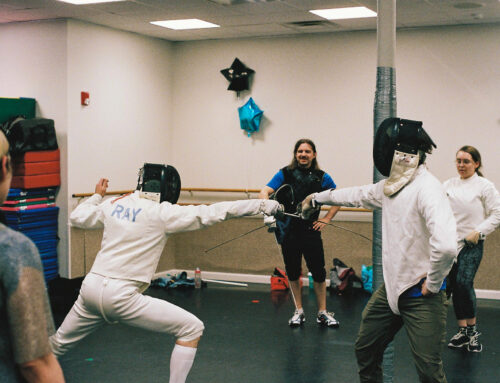
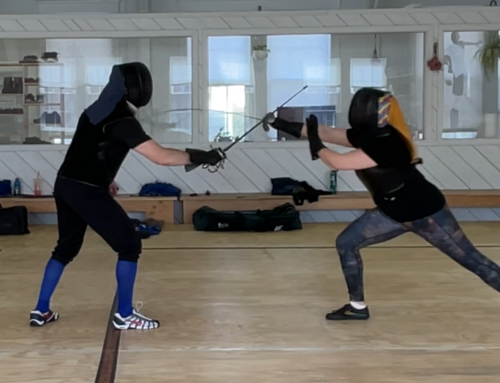
Take a look at the following photos. All of these show a closed-seconda. While the rapier is covering the high line, the secondaries are covering the low line, placed just under the sword arm.

Rapier & Dagger - Closed Seconda

Rapier & Candelabra - Closed Seconda

Rapier & Cloak - Closed Seconda

Rapier & Hat - Closed Seconda
Each photo shows a very different secondary, but the general shape and theory behind the position is the same. Cover high and low at the same time.
We also see this idea with starting guards or positions. Here are two plates from Fabris (1606). Notice how that the body position is generally the same, despite the offhand weapon being different.

Fabris - rapier & dagger terza

Fabris - rapier & cloak terza
We’ll be exploring this concept in our group rapier class this month.
While this is a very rapier-centric concept since secondaries was more common with the rapier than the smallsword, for example, the concept can carryover to other forms we study at the Academie.
Happy Swording!
—Justin
Head Coach | Instructor at Arms
Boston Academie d’Armes
(he/him)